Make Your Own Video Game
Ages ~8–12
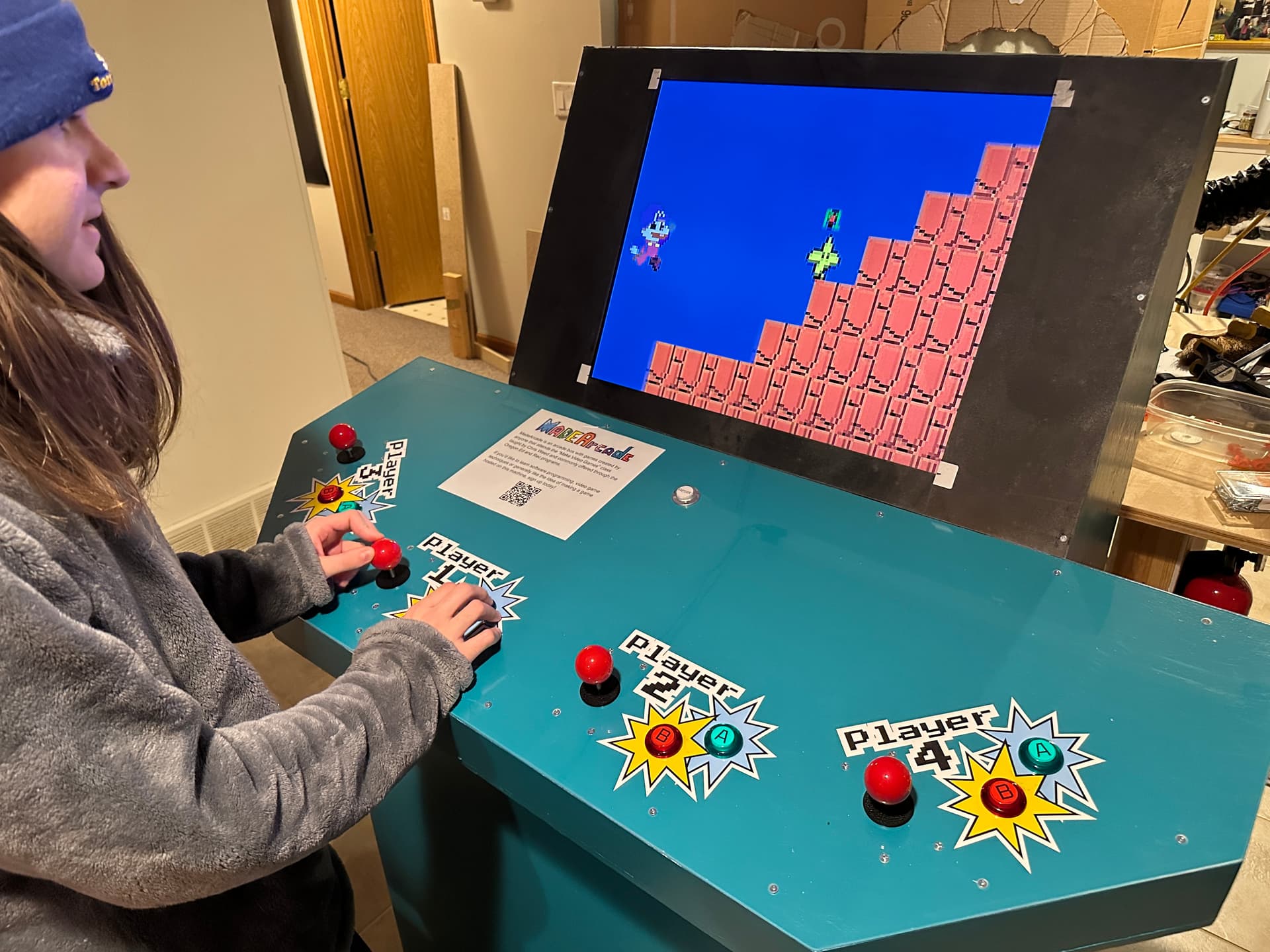
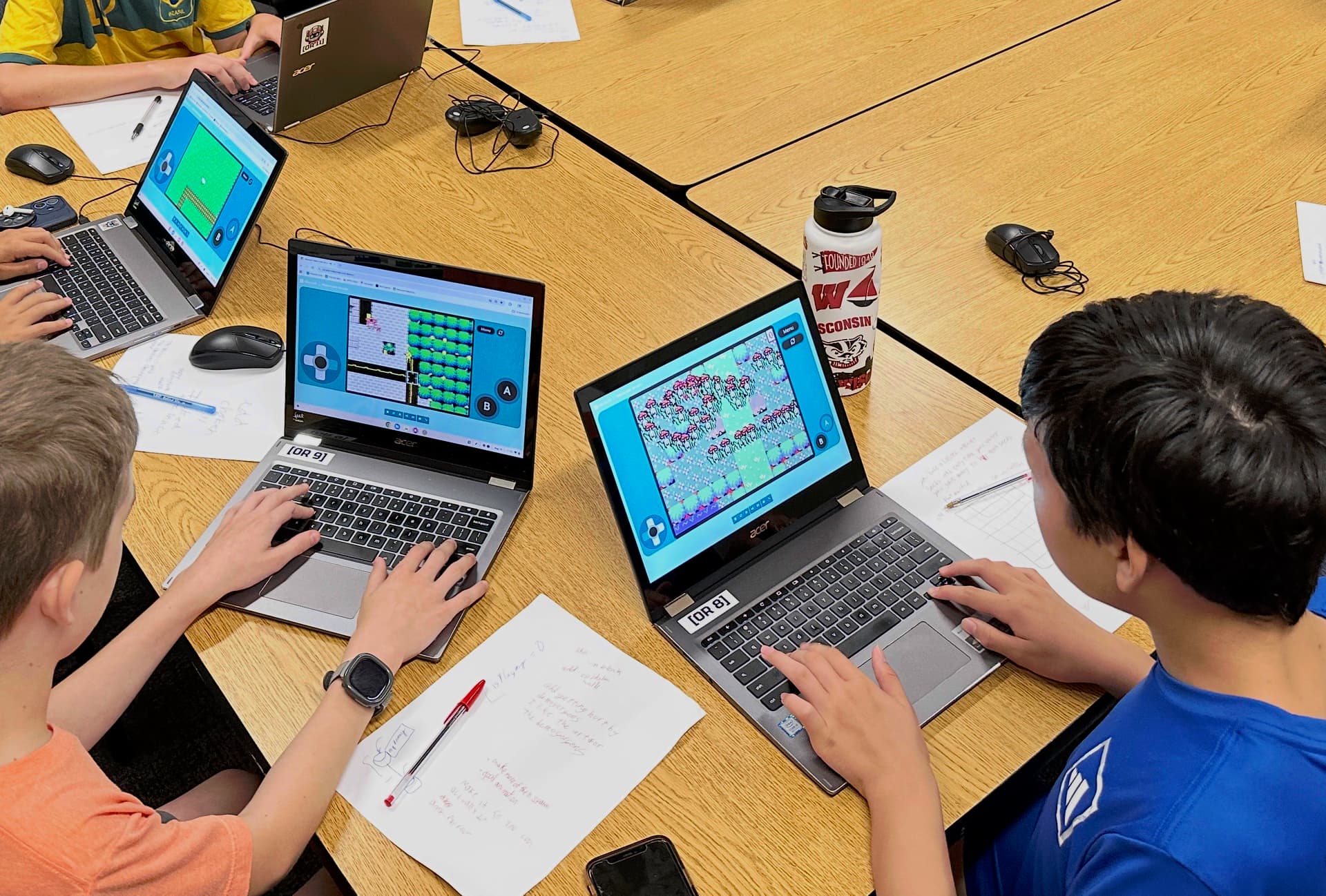
The flagship class. Kids use MakeCode Arcade to design characters, levels, and rules — and finish with a real game that runs on handhelds and on the arcade machines we place around town.
Sign up on Oregon RecDeskFor The Learn Of It is my small, local class studio. Kids make video games that end up on real arcade machines, build LEGO robots, autonomously water their plants, and turn ideas into objects with 3D printers and laser cutters.

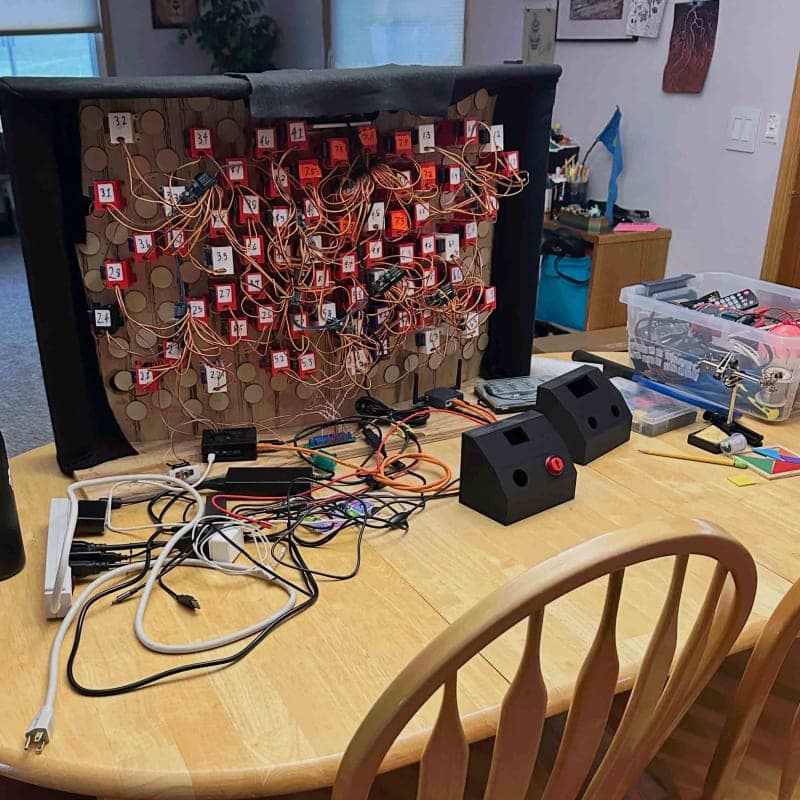
I'm Chris Weed — a software developer, maker, and educator here in Oregon, Wisconsin. By day I write code for a living; on nights and weekends I build arcade machines, LED walls, robots, large halloween displays or whatever shows up in my head.
A few years ago I started teaching kids to make video games, and I fell in love with it. There is nothing quite like watching a kid play a game they made themselves — especially when that game is running on a machine we wheeled into the local coffee shop.
Small groups, real projects, and a lot of laughing. Classes run through local rec departments and community spaces — and I take on tutoring and mentoring for maker projects too.
Ages ~8–12
The flagship class. Kids use MakeCode Arcade to design characters, levels, and rules — and finish with a real game that runs on handhelds and on the arcade machines we place around town.
Sign up on Oregon RecDeskAges 10–14
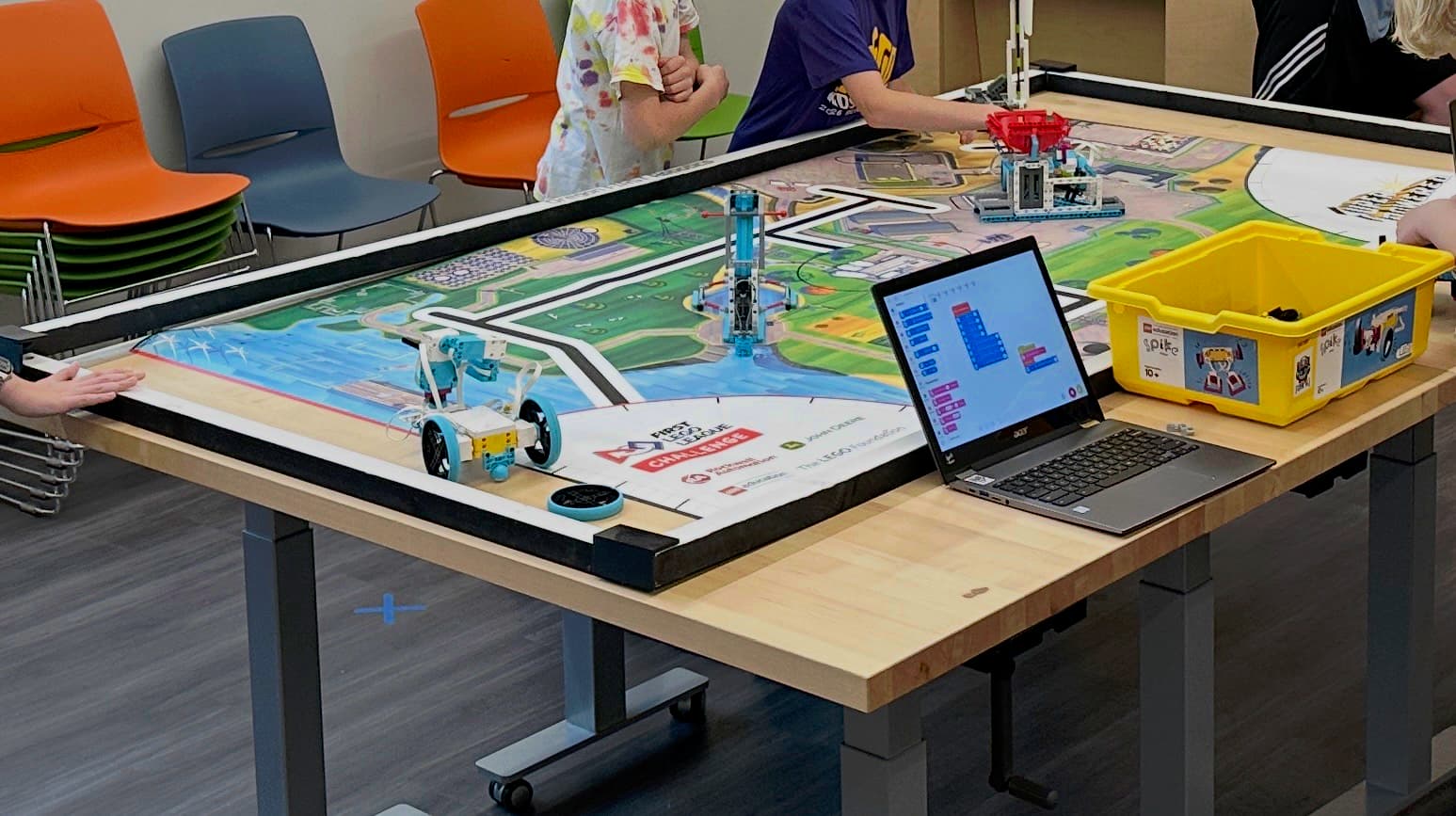
Build it, then bring it to life. Kids assemble LEGO bots and program them to drive, react, and solve challenges — with a path into competitive robotics.
Details at oregonfirstrobotics.orgKids & teens
One-on-one or small-group mentoring on a real build — an automatic plant waterer, an LED display, a handheld game. Pick a project from the menu below and we build it together.
See the project menuKids & teens
From a sketch to a real object you can hold. Kids learn design basics, then print or laser-cut models, displays, and parts for their other projects.
Real projects from my workbench, offered as classes or tutoring. The list keeps growing — if your student has an idea that isn’t here, ask me, we always find a way!
MakeCode Arcade games that run on real handheld consoles and arcade machines — not just a browser.
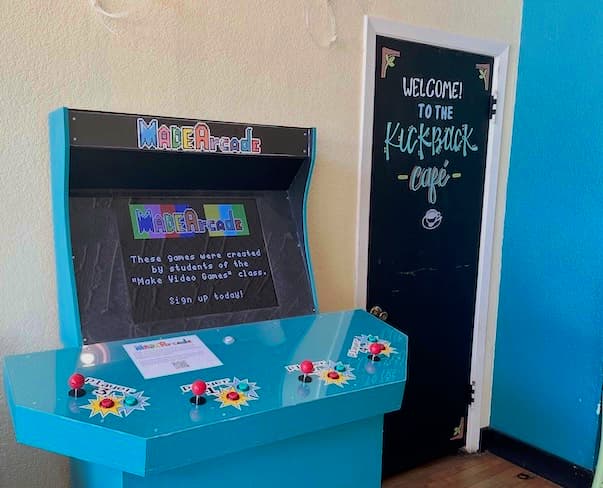
The cabinets themselves — real machines that travel to local coffee shops and restaurants.
A giant wall of animated eyes that can track hand movements and watch you move.
A micro:bit, a moisture sensor, and a pump — plants that water themselves.
Hack a bathroom sink to have the water flow on-demand with your pets. Cats approve.
Sensors, buttons, lights, and radios — tiny computers, limited capabilities, creative solutions.
Design a thing on screen, learn limitations and explore making physical items from digital designs.
Learn how laser cutting can build large 3D models, not just etching words on wood.
In most coding classes, a kid's project lives and dies inside a website. In my classes we take these games and move them onto physical machines — currently we have a large arcade in Kickback Cafe where everyone can play them.
Watching strangers line up to play something that you made is the best feeling, almost every week we have a new game loaded up created by students.

What’s running this season — details and sign-up at the links.

Ages 10–14
We design and build a robot to compete against other teams, scoring the most points across a variety of challenges. We also research and present an innovative idea to judges about a global issue — this year it’s biodiversity.
oregonfirstrobotics.orgKids
Learn how to make a video game using MakeCode Arcade. These are the games we put on real arcade machines — and along the way students learn the fundamentals of video game development and coding. In the age of AI, this becomes a foundation of software engineering: truly understanding how things actually work.
Sign up on Oregon RecDeskWatch for these in your community education and recreation department catalogs — or email me to hear when they land.
Explore a variety of paper airplane designs — how far do they fly, and why do they fly like that? A hands-on intro to aerodynamics, iteration, and friendly competition.
The foundations of how the web actually works — browsers, servers, and how they talk to each other. Even in the age of AI it’s a great learning experience to see what’s happening behind the scenes, and the foundations of the web aren’t going anywhere.
There are plenty of places a kid can poke at a coding website. Here’s what makes this different.
Student games get compiled for actual hardware and played on the arcade at the coffee shop — not just left in a browser tab.
I write software and build machines for a living — arcade cabinets, LED walls, garden gadgets. Kids learn from someone who makes real things.
Unlike online youtube stars, I'm a real human teaching students in person. The motivation of showing work to a real human can never be replaced.
Every game gets a shareable link for friends and family, and lives on the arcade long after class ends.
I’m planning the next session now. Email me to hear about it first, grab a spot, or ask anything — I’m happy to chat.
Email Chrischris@forthelearnofit.com